
After a couple of quick stops at what has been called the most well-preserved Renaissance towns in all of Spain and also UNESCO world-heritage sites–Ubeda and Baeza, we continued north on day 14, in mid-July, on the 7th leg of our 4th family camping road trip across Europe. Destination? The pre-medieval town of Cuenca, with its “hanging houses” that would look like they float in a winter morning mist. Here it is in pictures.
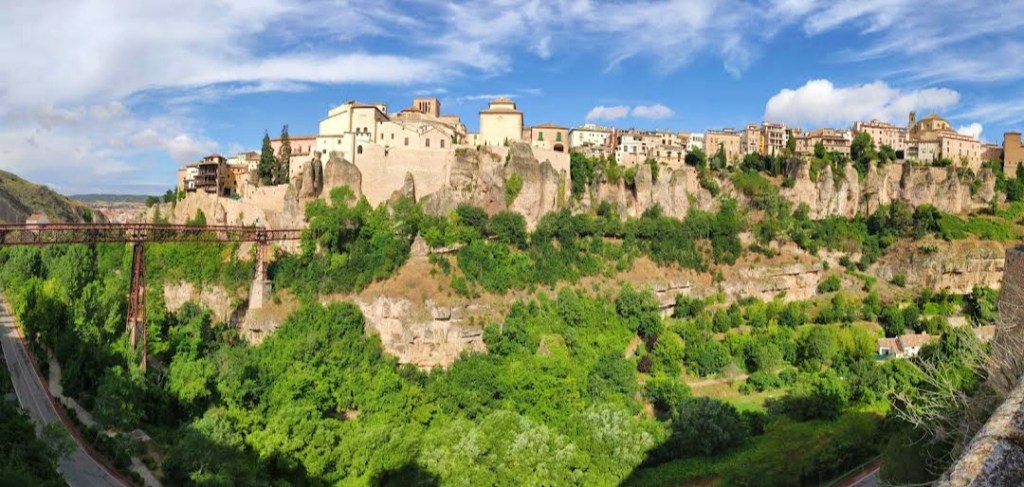
Photo: Jose Haya/GMAP
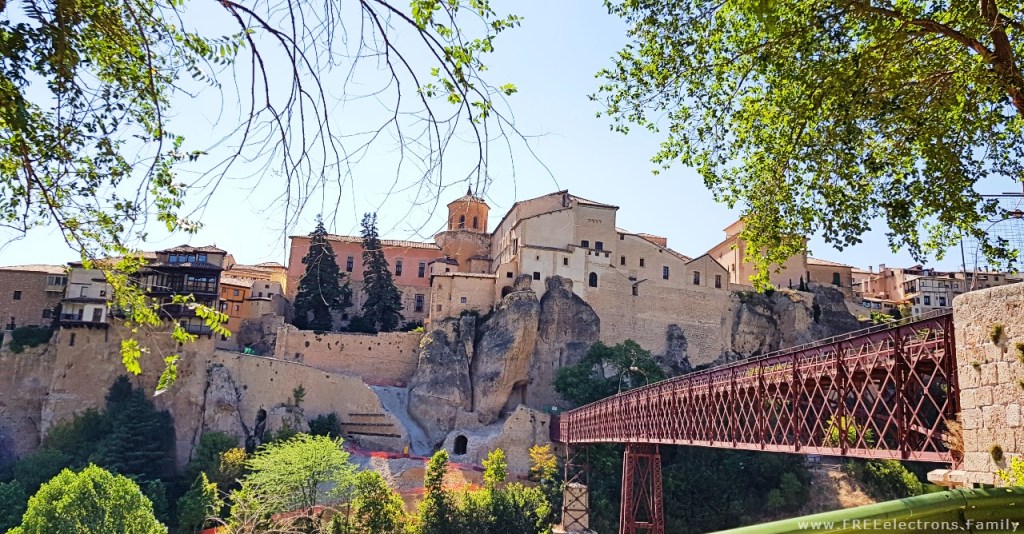
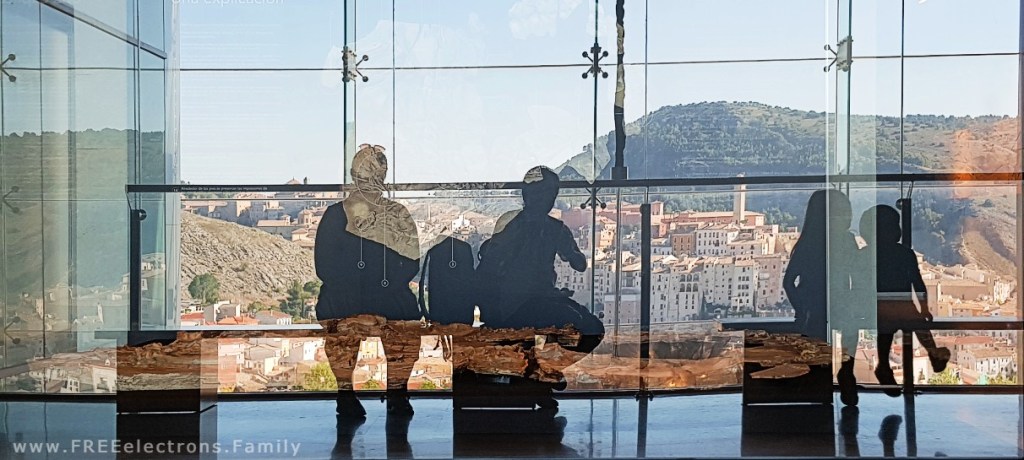
The city of Cuenca makes a lasting impression, especially if you approach the town from the north, taking the Carreterra del Castillo/Cmo del San Isidro road, some 11 minute-drive from Camping Caravaning Cuenca. The city was built on fortified settlement built around an old Moorish castle on top of the hill in the Middle Ages. The town then extended downwards on the rugged terrain. Once an economic and political centre of Cuenca, Ciudad Alta (High City or Old Town) is now the cultural, historical, artistic and even architectural part of Cuenca. Ok, OK… enough about that!
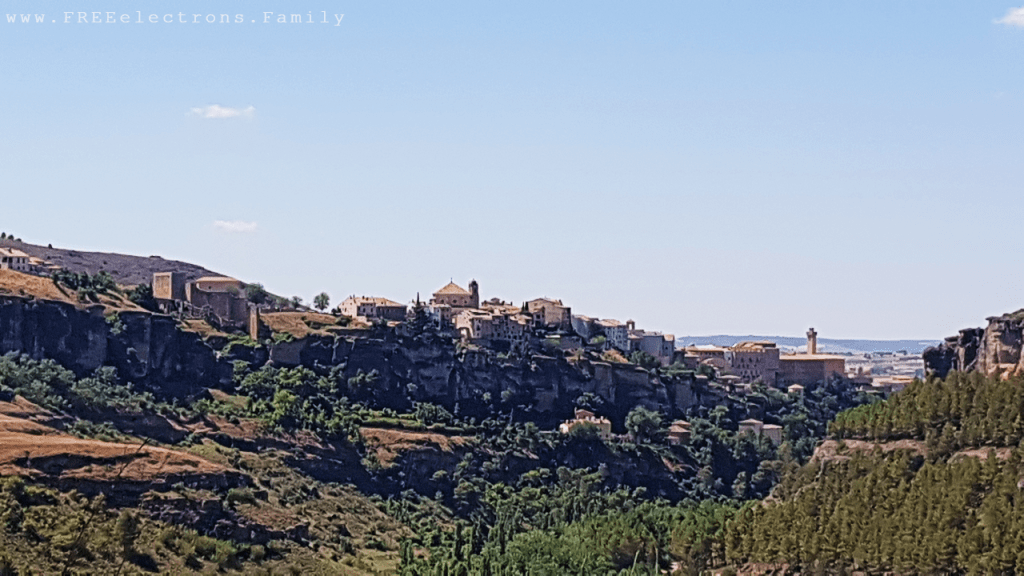
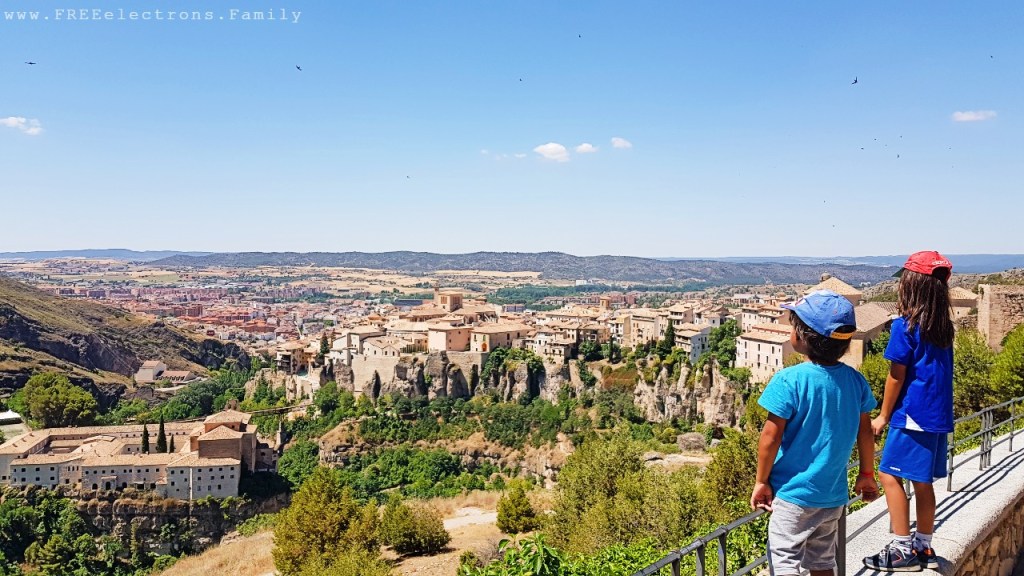
Unlike the landscape of previous days (on legs 5 and 6) across the province of Jaen, northbound towards Ubeda and Baeza, gone are the pretty landscapes and seemingly endless fields of food crops, with what looked like different crops in each plot (olives, wheat, foodstuff), instead of monoculture, make for an eyecatching view, with backdrop of the mountains. . .
Gone too are the the desert-like cave houses of Guadix that look like Arizona (leg 5???)–where primitive songs of the outcasts, traditionally the gypsies of Spain, might have flourished, we sluggishly move through northeast Spain, passing through fields of foodcrops and groves upon seemingly ceaseless groves of olive trees.
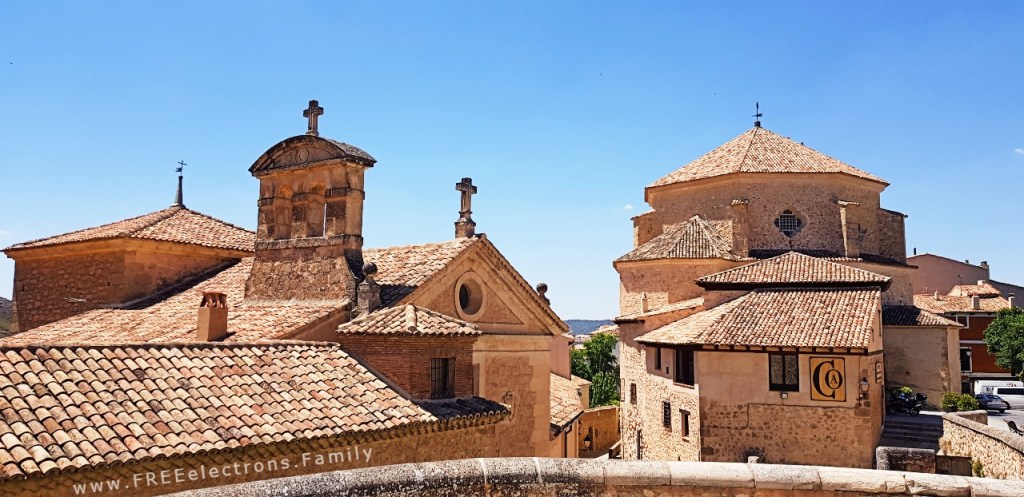
Now, rugged mountain terrain where the town of Cuenca almost disappeared, or at least blended with its surroundings. A natural camouflage which surely was in the minds of those who built the original fortress-settlement.
Casas Colgadas/Hanging Houses
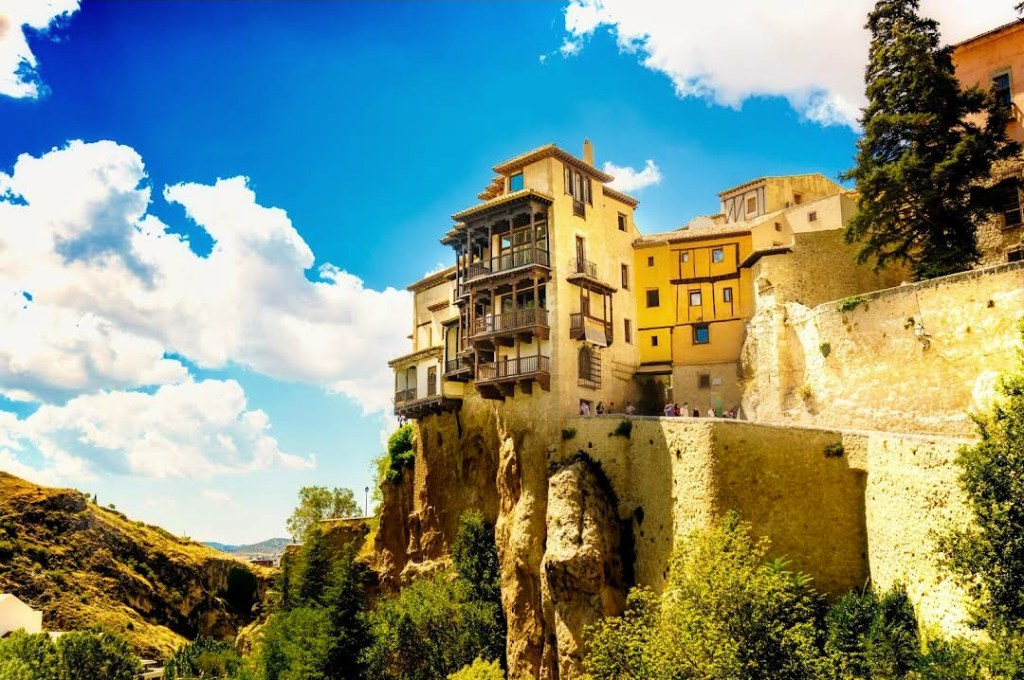
This is what you’d come here to see, isn’t it? AT least for most people, like us. Why? Well, it’s so unique that it’s been declared as a World Heritage site (Ciudad Patrimonio de la Humanidad). You’ll find it in the upper part of the city called Ciudad Alta. Apparently it is the symbol of the cultural, historical, artistic and even architectural glory of Cuenca.
Here’s what the city’s tourist guide have to say about their most prized feature, “the Casa Colgadas or “Hanging Houses” today are the outcome of alterations made in 1928 to the original medieval houses. Since 1966 the Casas Colgadas have been home to the magnificent Museum of panish Abstract Art, with works by the main artists of the “Abstract Generation” of the 50s.” And here I thought it had something to do with the Hanging Gardens [Background music: The Cure]. . . of Babylon!!!
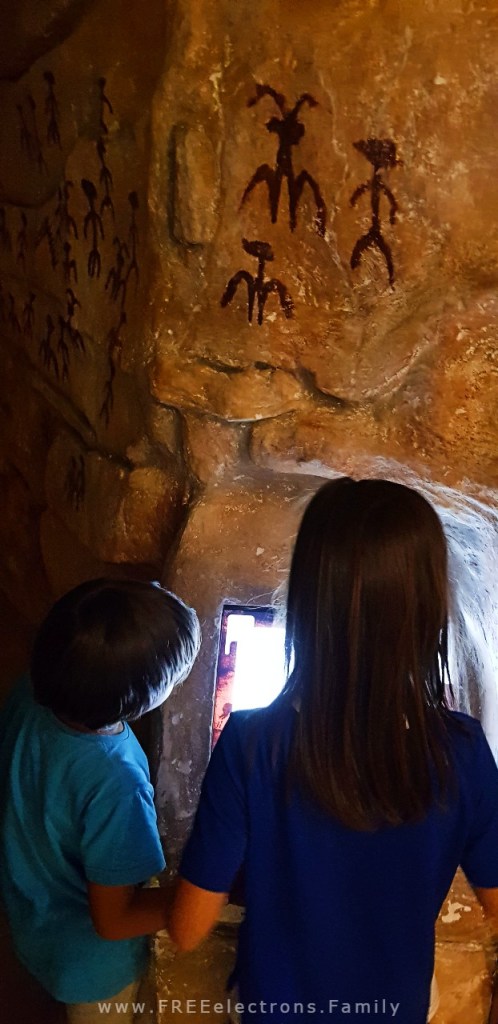
What Else to See in Cuenca?
Cathedral–built on the site of a Muslim mosque in 1183, a year after the Christian king Alfonso VII re-conquered Cuenca. Apparently, it’s an early Gothic cathedral which means really nothing to my art-illiterate family. Made worse by the need to pay to get in for a tour. I’d recommend just entering it during mass and hang around a little afterwards for your self-driven tour, all the while respectful of the church rules and ettiquettes. €5 for cathedral, plus separate prices for Saint Peter’s church and tower, treasure museum and triforium. Or €9.50 for all. Children up to 8 are FREE.
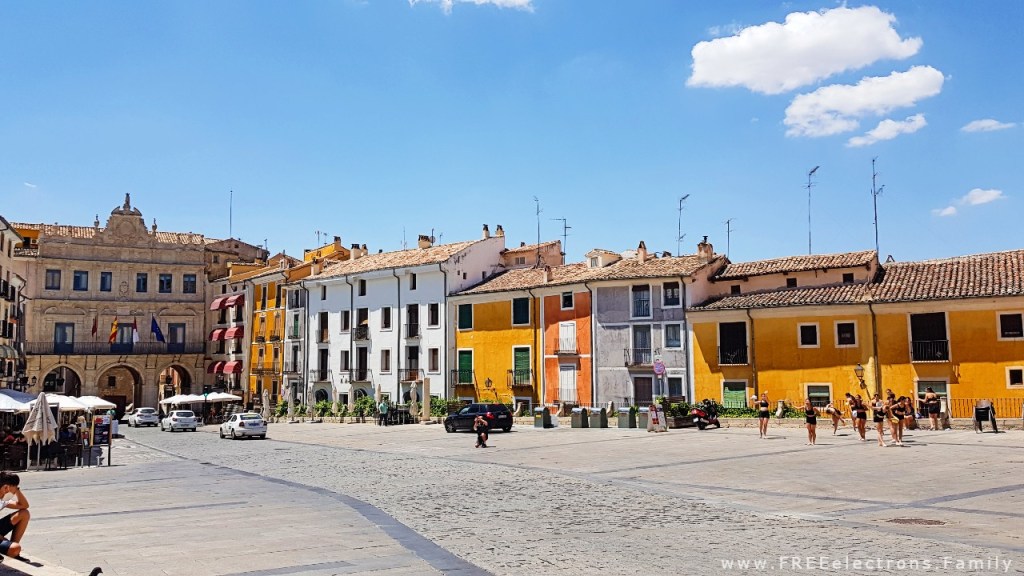
Convento de San Pablo–that huge complex of white buildings on the other side of the gorge, opposite the main town. It was a former 16th century Dominican convent, now a “Parador” and home to “Espacio Torner”. Don’t be fooled by the enticing name…. I believe that’s a high end Hotel and Restaurant. From the town side, you’ll have to cross a bridge to get there. Sadly it was closed during our visit. Aaarrgghhhh!!!
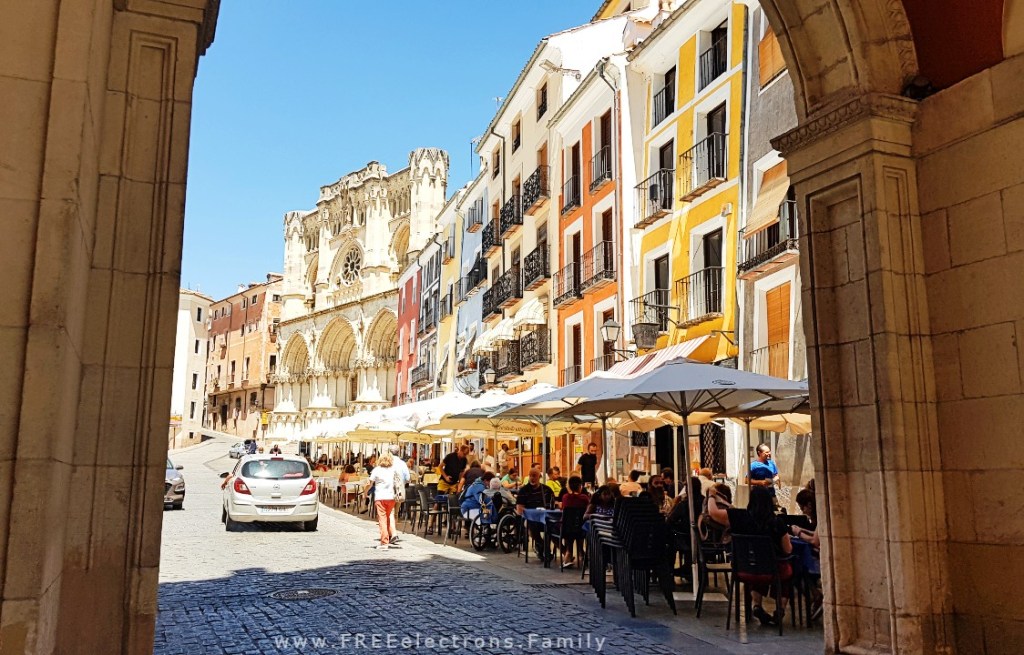
13th Century remnants of 13th Century Castle–still standing after over 700 years, whose arch underneath (16th century Arco de Bezudo) marks the northern entrance to Cuenca. It’s in the uppermost part of the city, in Barrio del Castillo. You can get to the top of te castle fortification and admire impressive views of the surrounding gorges and rugged hillsides, as well as the view down of the city. The climb has staircase, stairs and railing to make the climb easier and safer.
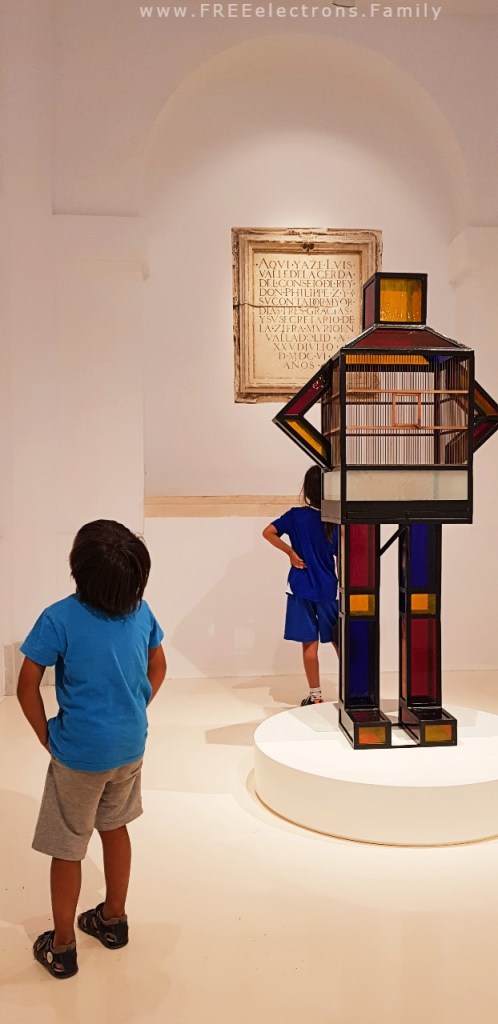
Centro de Arte Moderno y Contemporaneo Castilla-La Mancha, Colleccion Roberto Polo at the 16th century Iglesia de Santa Cruz. FREE. Paintings,sculptures, art…. some explicit, others of note the famous India ink on paper sketch of Don Quixote and Sancho Panza by Pablo Ruiz Picasso. Who’s that?
TIP:
- For those with smaller children or who have difficulty with walking up-and-down hills and steps, there’s a “Tren Turistico” (Tourist Train) that runs 3 times in the morning and 5 times at night. The train would take you to Barrio del Castillo, Plaza Mayor, Calderon del Barca and Auditorio and back. Each way would run about 30 minutes. Schedules change during high summer season. It’s a great way to see the town too without straining yourself. It comes with an audio guide in 5 languages–English, Spanish, French, German and Italian. WTF?!?!?!?! No Chinese or Russian or Japanese?!?!?!
- Recommend having a meal an outdoor seating area at Meson San Juan at Plaza Mayor. THIS IS NOT A PAID ADVERTISING. We just liked the food–the menu for the day that came with a full carafe of Sangria for a mere €12. I know, I know. . . it’s better to stay away from tourist spots. But it was relaxed enough at this plaza (reads: not too busy at the time of visit).
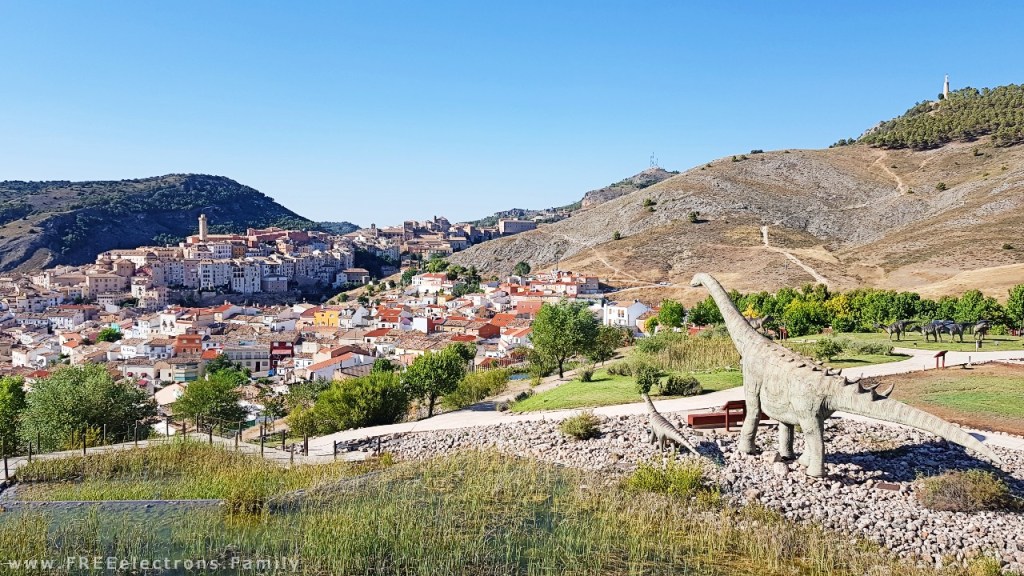
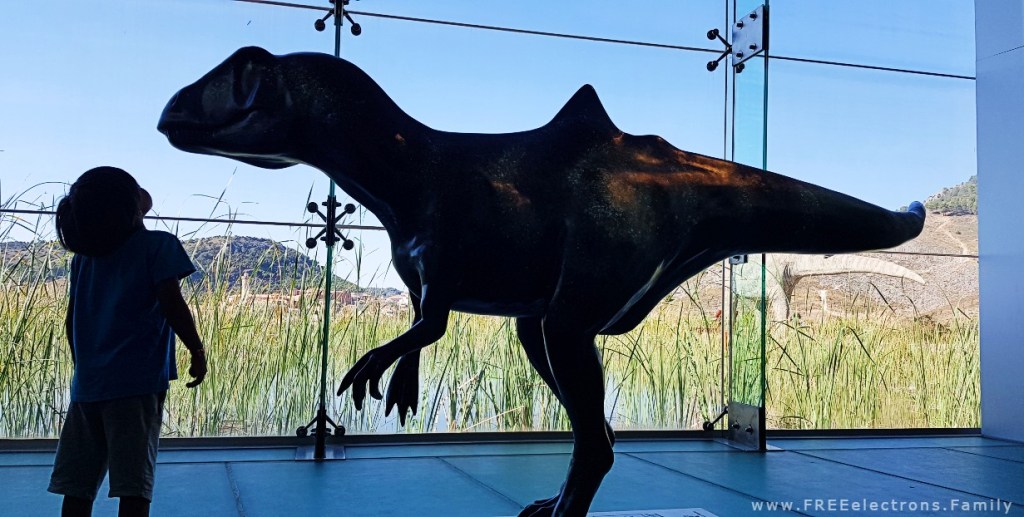
- If you have little children DO NOT MISS the “DINOSAUR MUSEUM” at the Museum of Natural History/Paleontology. In fact you should dedicate at least half a day for it. It’s a FAMILY-FRIENDLY, KID-APPROVED spot with FREE parking and a playground outside.
- If you want to really enjoy what the town has to offer, make your stay here last more than 3 days, at least. One day to check out the old historic center, another the dinosaur museum and its surroundings, and yet another to climb the hills and discover viewpoints of the medieval Muslim fortress-turned-Christian town below… all the while and everydau enjoying the culinary offerings of this once powerhouse of a town.
UNFILTERED Road Trip NOTES on the road to Cuenca
Some 200+ kilometers and 3 hours north, we move our little gypsy Mazda MP5 “caravan” from the jewel-chain of aquamarine lakes of Ruidera to the drier and higher fortress town of Cuenca, made famous by their hanging houses.
First, supply stop at the supermercado across from Camping Los Batanes. Then, a snack at the lake where we met an Austrian father on his road trip to Carmona with 4 kids. They were swimming in the lakes, trying to catch fish. We realize how we should have given this stop a couple more days to actually enjoy the aquamarine jewel lakes. What to do when there’s so much to do and so little time? Save some for the next time around!
The beauty of these chain of lakes is even more evident as we get on N-430 towards Ossa de Montiel. Along the road are aquamarine water lakes–Lago del Rey, nearest camping seems the most beautiful. This is a well developed destination with chiringuitos (waterside bar shacks), little hotels, parking lots and restaurants all along the road.
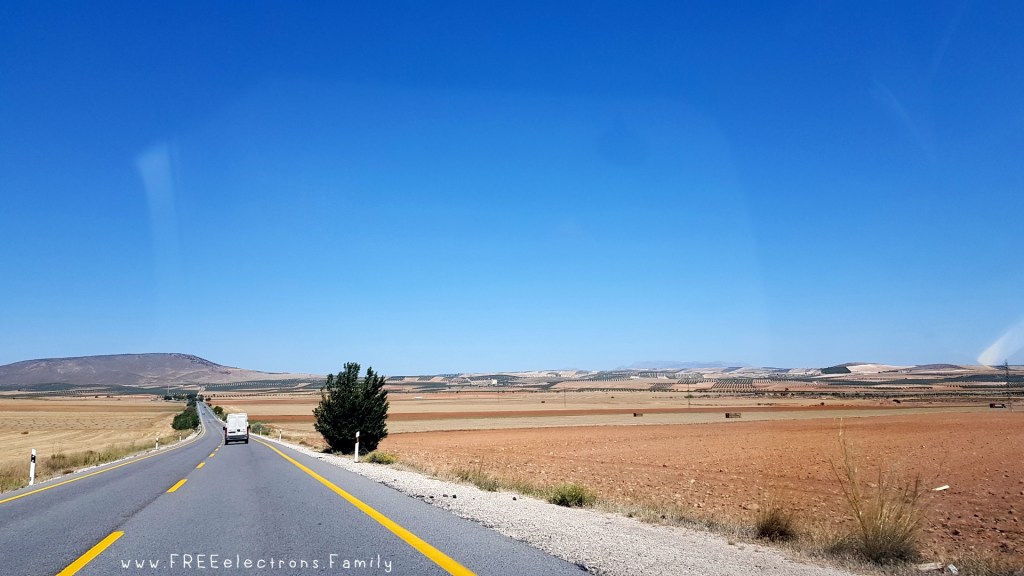
We were able to appreciate the view because for about 23 kilometers on this no-passing lakeside road towards the town of Ruidera, a Mercedes in front of us stop-and-start-and-chugged along well below the speed limit of 30 kmh.
We skip Ossa de Montiel, turned north onto CM3123, and passed by a wind farm on the right (northeast of Ossa). Then, more wind farms on the hills of Caserio los Puercos.
Farther down, there’s a long straightish, bobbing road, flanked on both sides by vineyards. Interesting vines without support, like midget outcrops half-a-meter tall at most. They are almost crawling, sprawling vines.
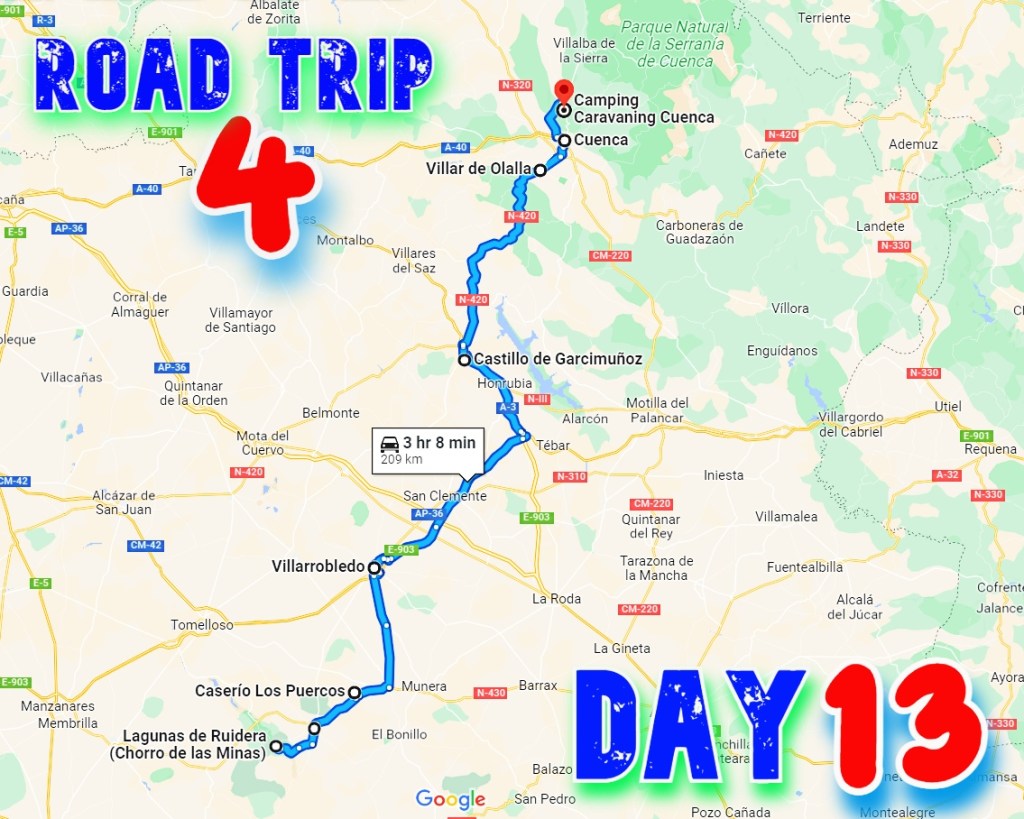
Connect to A-43 / E903, near Villarobledo, and more windfarms (one off exit 172, A-43, Atalya etc. and another with ~12 turbines off exit on E-901, west of Castillo de Garcimunoz).
Then N-420 through the well-paved winding road of the “serranitas” or the smaller hills on the road to Cuenca, towards the National Park of the Serrania de Cuenca.
Down the mountain through a sleepy town called Villar de Olalla.
Later, on the way out of Cuenca we discovere the American classic, Papa Johns Pizza… which our older son called Johnny Pops. I say Johnny Pops Naked! Stopped by for Papa Johns special pizza with alitas and some fresh fruits at the fruteria next door–no good; expensive, unlike in our dear Andalucia.
what to do Farther South of Cuenca, in Granada Province
Here are some of the must-do/must-see things in Granada, other than visiting Granada–the city itself of course–and all its majestic places to visit. That’s a separate post altogether.
Check out this video of FREE things you can do with kids in the Sierra Nevada. . . in the snow!
Hoya de la Mora in the Sierra Nevada–The southernmost part of Europe, where you can ski or sled or do your snowy things down a mountain and swim in the Mediterranean sea within one hour of each other.
With over 300 days of strong Andalusian sunshine here in southern Spain, you would not think that there would be snow. Think again!
The Sierra Nevada, about a one-hour drive from the city of Granada, boasts the southernmost point of Europe where you can ski, sled and snowboard as late as early May.
You can literally hit the snow slopes all morning and swim in the Mediterranean in the afternoon.
You can visit Pampaneira along with the other white villages of Capileira and Bubion in a day. For us, slow-go family travelers (with KIDS!), it would be too much.
In this sunny south side of the Sierra Nevada–the artist-trap mountains of Granada–we’d like to especially take it easy. . . you know, like Sunday mornings.
Next Stop: Last Stop in Spain, Forever? Camping Lake Caspe
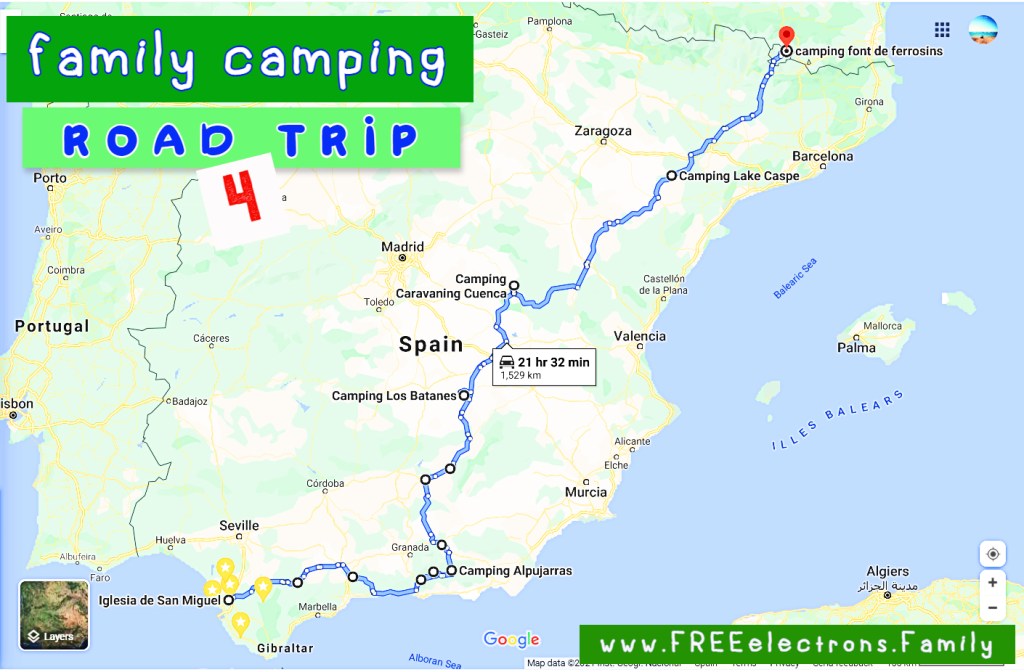
Onwards, upwards. . . . to Andorra! Here’s the first half of our family camping road trip. . . number FOUR! 1,617-something kilometers from Jerez de la Frontera, detour to Bolonia, then Setenil de las Bodegas, the white villages of the Alpujarras, the caves of Guadix, Baeza, Ubeda, Ossa de Montiel, the hanging houses of Cuenca, Lake Caspe and finally the little country of Andorra. . . at least for the first half of this trip!
Last Stops: Cave Living in Granada
What’s it like living in a cave in the mountain desert land of Granada in Andalucia, Spain? Check it out, in pictures!
That’s it! Explore more places to see. Click on the links and let us know what you think about them.
Big Smile! -the free electrons family
Thanks for checking us out!
SUBSCRIBE!
BIG SMILE!
 free electrons family
Hi Six, Im in Sevilla. I will move to spain. Please contact me– I miss u and admire you
LikeLiked by 1 person
That you are finally moving tyo Spain is wonderful, Beverly! Six will send you contact info via PM on messenger. He is no longer on FB. Are you moving to Jerez?
LikeLike