
So, you plan to have a unique cultural experience for your Easter in Spain (Holy Week/Semana Santa). Here’s what to expect whether you are going to be in Jerez de la Fronterra or anywhere else in Spain, particularly the big towns in Andalucia this Easter week or at some point in the future. It’s one not to miss.
Check out our YouTube video below. It will give you a unique cultural experience of Holy Week life in our little-big village, Jerez de la Frontera.
UPDATE: This post was originally written in 2019, before coronavirus hit us all. All Holy Week processions and activities were cancelled during the very strict Covid-19 pandemic lockdown in Spain. In 2021, it’s a bit better but ALL processions are still cancelled.
When the global pandemic is over, things to do in Andalucia, Spain during Holy Week (Semana Santa) will all likely return to the same general schedule as discussed here.
holy week in spain: procession of piety
What memorable family things to do with kids in Spain during the Holy Week (Semana Santa)? If you are here, you cannot miss it–the religious processions all week long. . . everywhere!
In Andalucia such nazarenos (penitents’) parades are apparently much more glamorous than in the northern parts of Spain.
In Jerez de la Frontera, there are week-long processions of over 30 dedicated religious fraternities; many have their origins date back to the medieval ages.
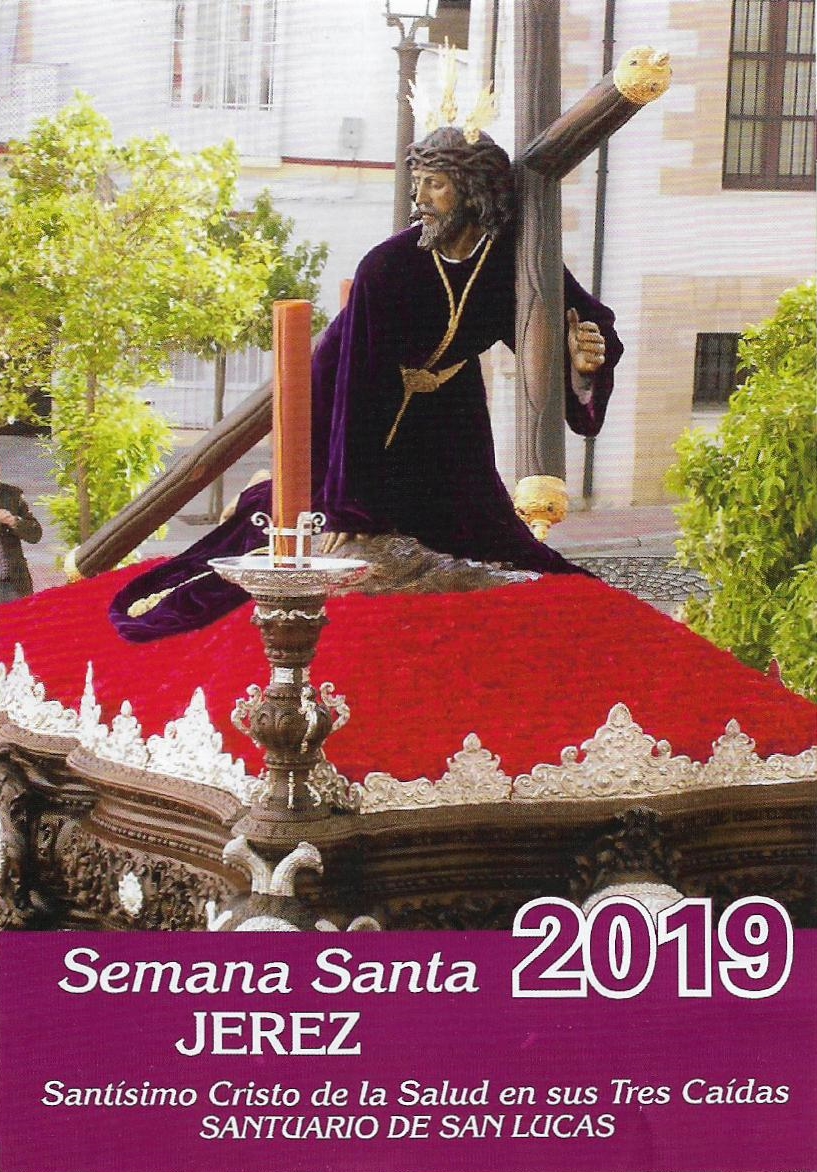
There are over 40 dedicated religious fraternities here. Each will have its group of 40 to 50 penitents, carrying a heavy load of the delicate statues of Jesus or Mary on a heavily adorned platform on top of them.
They will be marching together one small collective step at a time through the narrow streets.
Each procession will have a pre-established route from its home parish and back that takes several hours several hours.
Some brotherhoods have full marching bands. Others walk in absolute silence.
Some stop at pre-determined balconies to hear Saeta (a primitive religious chant that made its way into flamenco).
Others move with impromptu saeteros (singers/chanters) in the background.
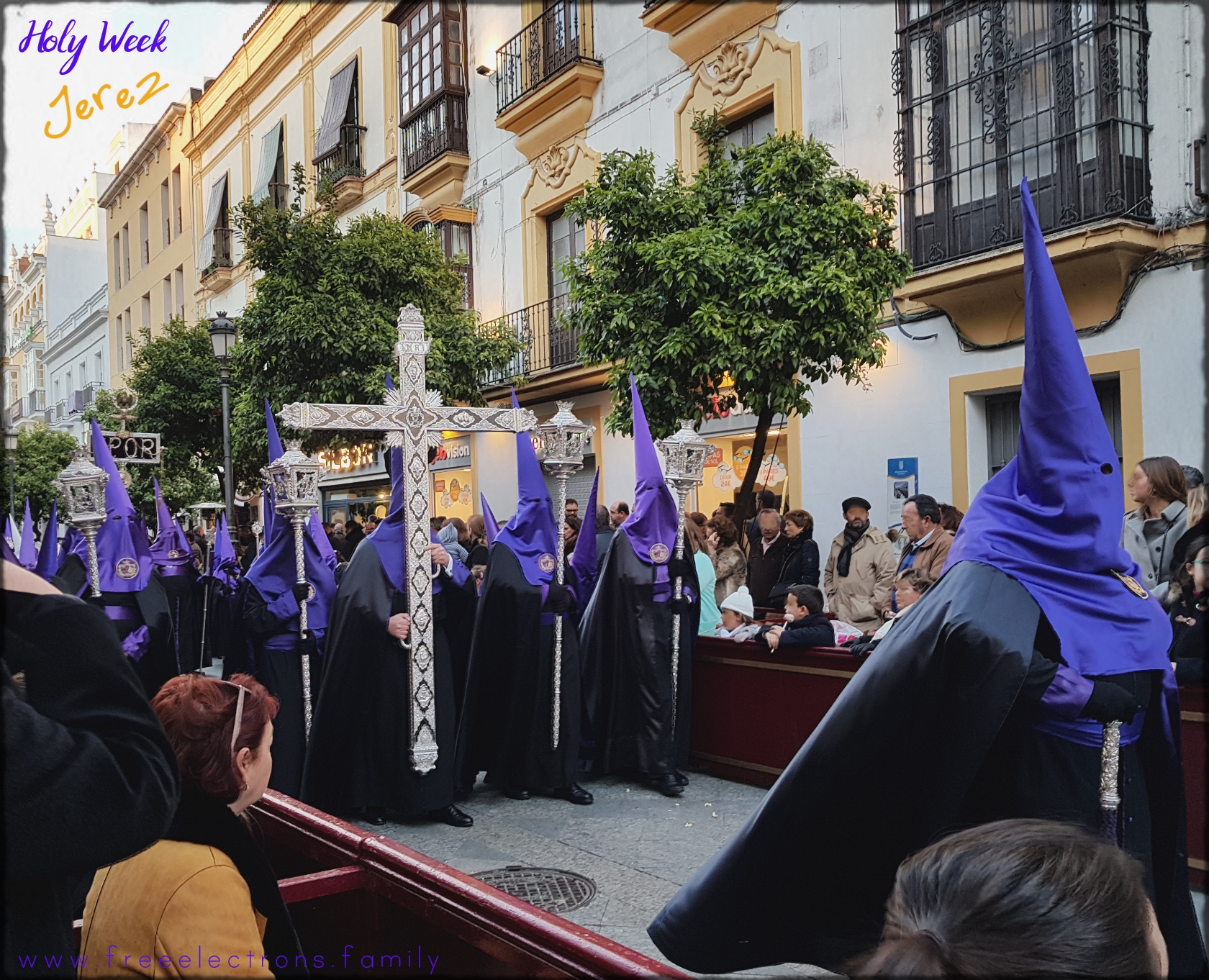
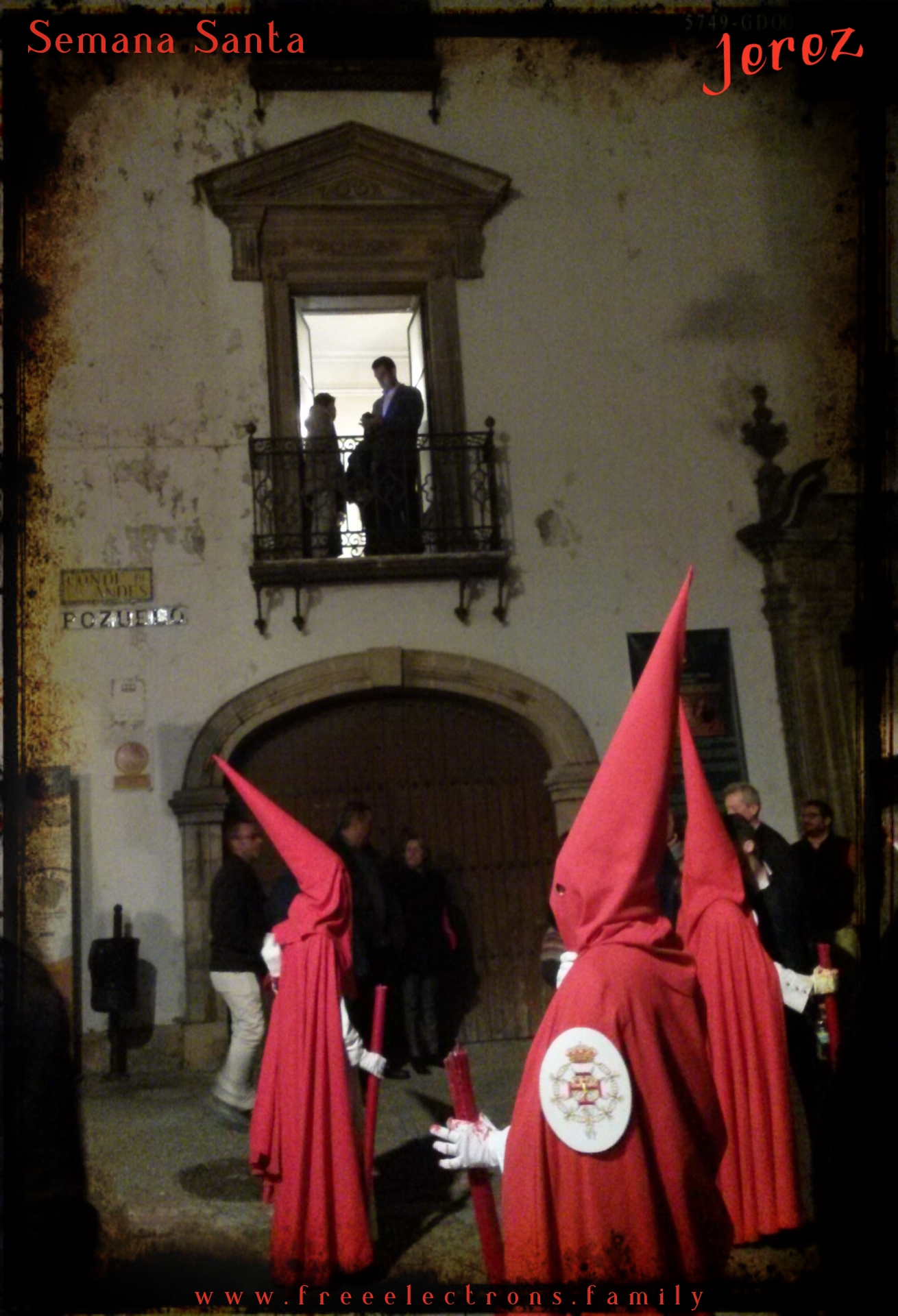
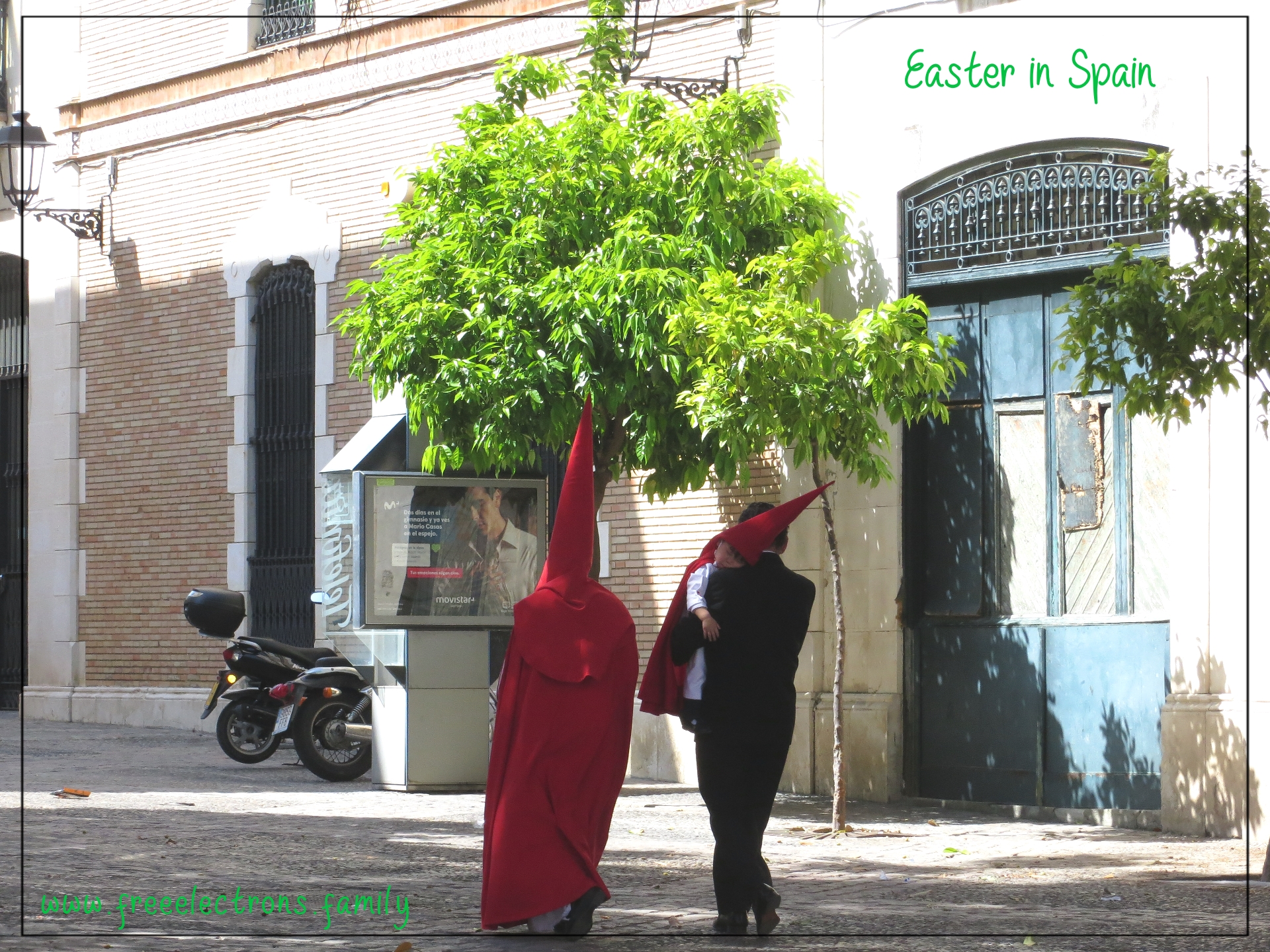
What’s the story with the hoods? I know. You know. We all know the first thing that many Americans see when they look at the white hoods with conical tips… the racist hate group predominantly in southern U.S. Here, in Spain, the tradition of penitents wearing a set of tunic, robe and hood with a pointy tip at the top dates back to the medieval ages.
The purpose was (and still is) to mask the identity of those asking for repentance or forgiveness for their sins while demonstrating their penance in public.
They come in all colors here and are quite a sight to see, especially with the religious fervor of the procession and the audience alike.
Be Flexible with your schedule. Many tourist and public places close during this period. Some bars/clubs will close. If they are open, the schedules are erratic.
This is Catholic Spain after all. It’s all about Jesus and Mary this week… everywhere in Andalucia for that matter.
These processions of worship happen 5 to 6 times a day, day and night into the wee hours of the morning, all over the city.
Each would take hours to depart from and return to their parishes.
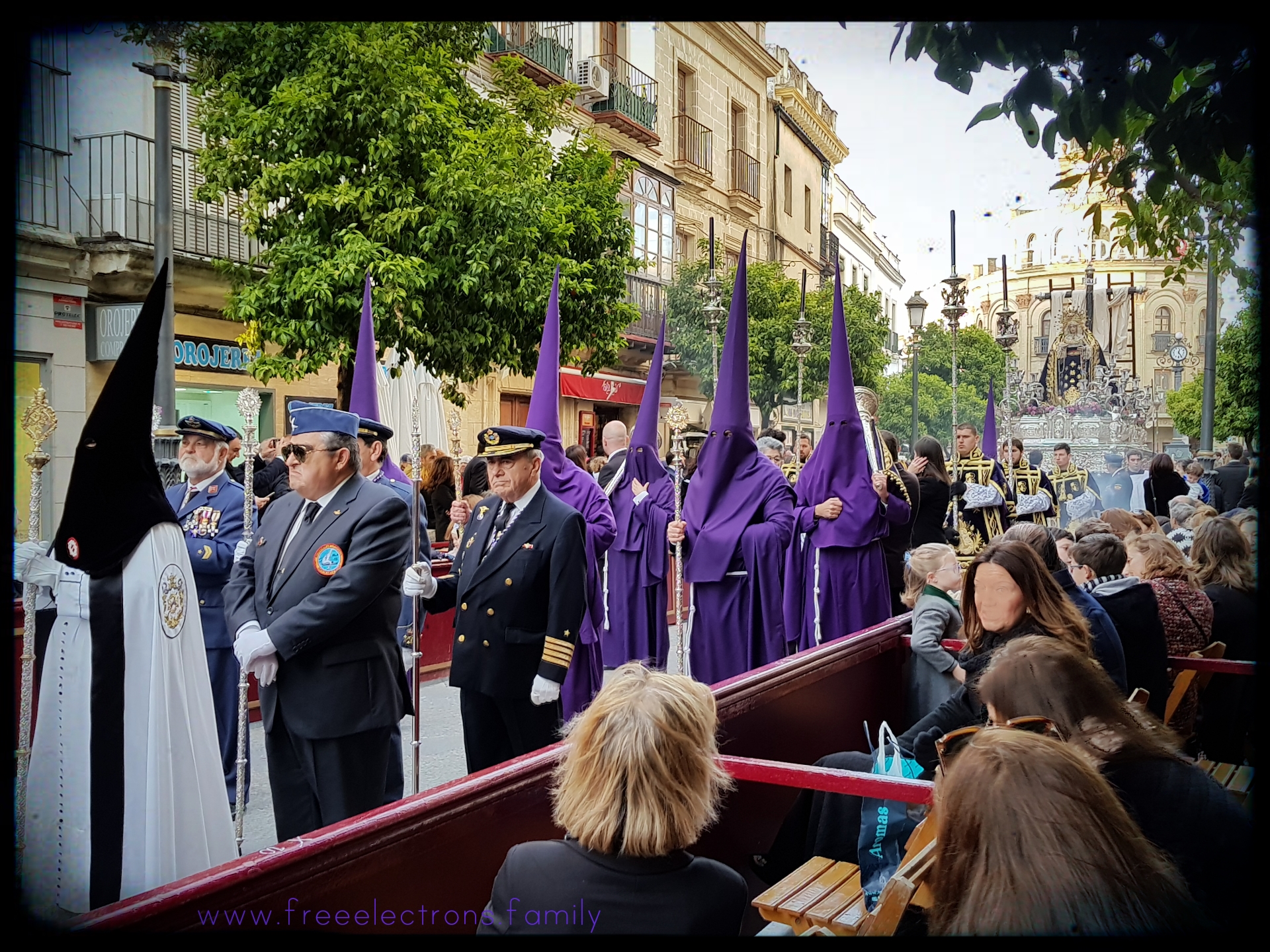
Each has its pasos (floats) with sculptures of Jesus, Mary and scenes from the Passion of the Christ, some as old as the hermandades (brotherhoods) themselves.
This is a cultural and educational experience for the entire family, whether you are a Catholic or not, believer or not. . . with children or not.
city center congestion during semana santa
Be prepared to slow down your itinerary a bit because of what would seem like endless processions during the week here in Jerez de la Frontera (and other towns in Andalucia, such as Cadiz, Seville, Granada).
The city center, particularly the old historic center (within the old walls of the city), will have more people than normal throughout the day, especially towards the evening.
During our first Semana Santa here, it took us over 3 hours to get home from the train station to our apartment in the center. It’s a 20-minute walk normally. We got caught up in 3 different processions snaking their way through. . . well, everywhere.
And, with kids… a L.O.C.A. (loss of cooling accident ; )
what else to do During HOLY WEEK in Jerez, Cadiz?
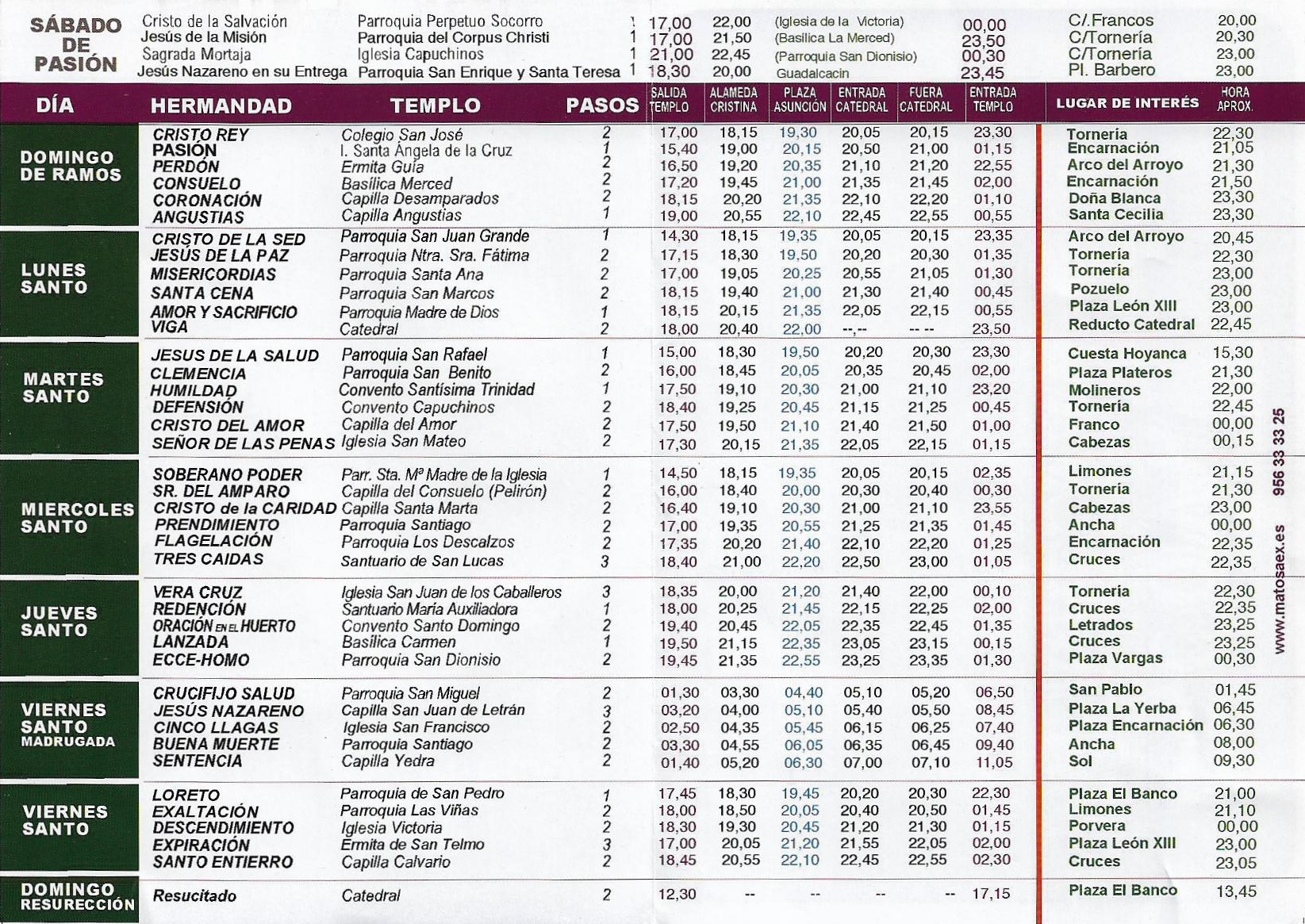
The processions take over the city activities here. Here is the schedule and itinerary of some of the processions (horarios y itinerario de semana santa) from the union of brotherhoods (Union de Hermandades de Jerez). It is in Spanish but you can decipher where the processions and at what time and the route/stops.
As the boys are out of school (all public schools remain closed for the Holy Week), we try to go about to see at least one procession a day for their cultural experience.
At first, we thought that it would not be interesting for them as they were only 1.5 and 5 years old then. But they were interested.
Even more so, because we tell them stories about it, even though Six is not religious. They both also ask questions about Jesus and Mary as they see many statues of them being worshipped.
The kids like the music too.
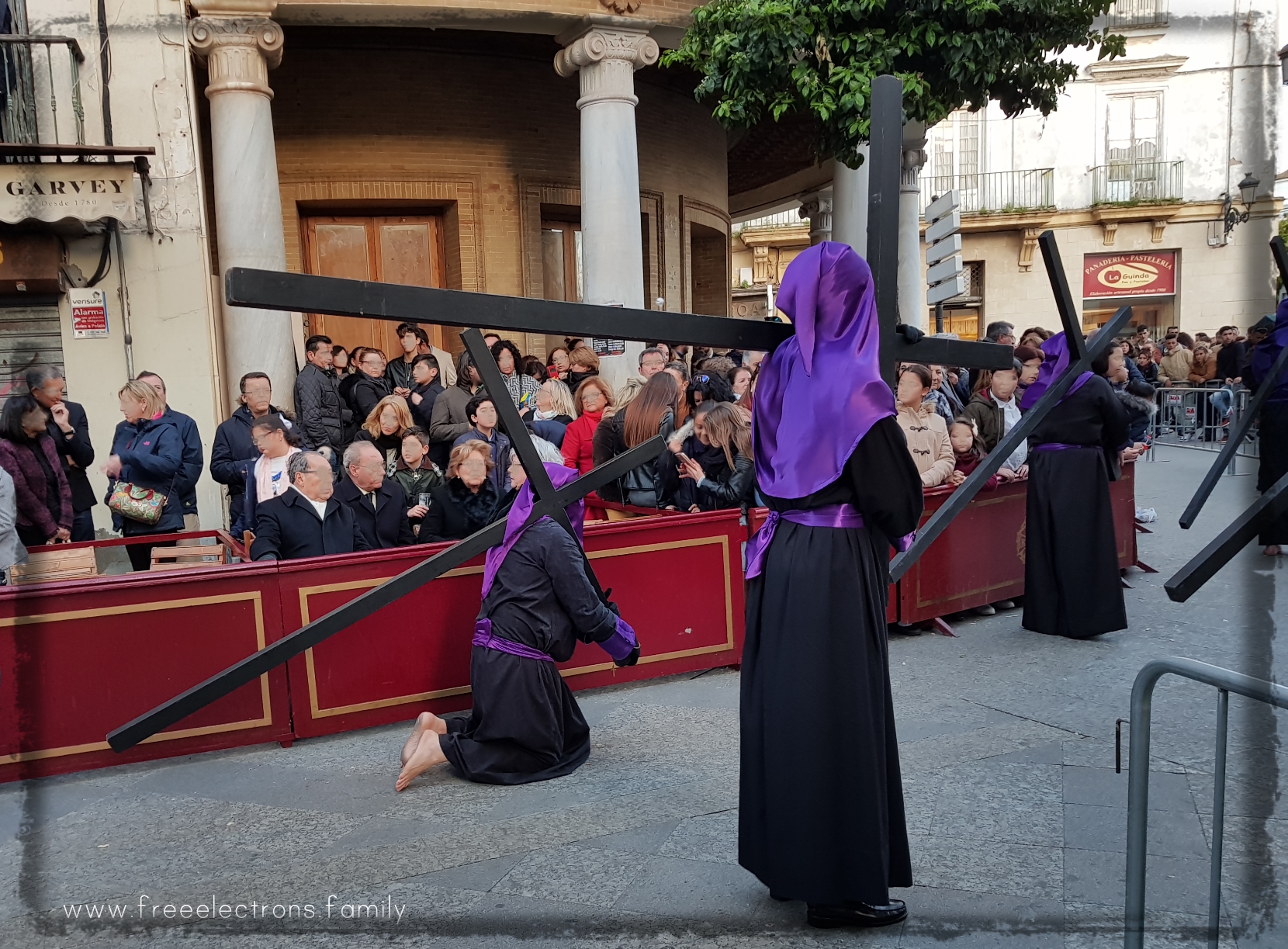
A penitent kneels during a procession during Holy Week (Semana Santa) along Calle Larga, Jerez de la Frontera, Spain.
So what else can you do with kids in jerez?
Of course, kids get bored. So, it’s best to know what other things you can do in and near Jerez during your Easter in Spain Holy Week vacation. Here’s some ideas.
In this land of sherry, flamenco and dancing horses, you are sure to find the first two during your stay here in the Easter Holy Week. There may be horse buggy rides available for the tourists but the show for dancing horses would usually be closed for the week. This is Catholic Spain after all.
Playgrounds. If you want to take a break from the processions, playgrounds always buy you some time (and sanity) with the little ones. Here are 5 of the best FREE playgrounds in Jerez de la Frontera.
Flamenco. In this “little big” town of flamenco there would still be flamenco shows in Jerez at Tabancos (these are essentially “watering” holes that specialize in flamenco shows/atmosphere, like El Pasaje, A La Feria and Tabanco Cruz Vieja) and peñas (flamenco associations like Peña La Buleria, Peña Buena Gente), except for the holiest of days–Easter.
There would be plenty of wine and sherry there or at local bars. There were FREE daily flamenco shows during the Easter Passion week before Covid. We will just have to wait until the Covid pandemic is gone for more flamenco!
Beach play–a favorite babysitter of this happy house husband. The nearest one from Jerez is called Valdelagrana, about 15 minutes away by car (reachable by train with about a 15-minute walk from the station). It’s one of the most common developed beach areas here.
Others, if you have a car is Rota, where you can see the U.S. and Spanish ships in the distant background of the naval bases. Or Playa Muralla and Los Torunos in El Puerto de Santa Maria. There are many others of course.
Cadiz. Highly recommended to visit this supposedly oldest continuously inhabited city in Europe and the birthplace of modern European liberalism (or something like that). It also has long beaches, even a playground right above a beach (Playa Santa Maria del Mar).
Cadiz is less than a 30-minute drive from Jerez (also by train that leaves every hour–schedule (or horarios in Spanish) may vary during Sundays and holidays).
Nearby “white villages“: If you cannot get to Ronda, visit Arcos de la Frontera. It is like a little Ronda that sits atop a fortress hill. Medina-Sidonia was the old capitol of Cadiz province that also sits high atop a hill. Both are quiet places that will also have processions of their own. Be aware.
Share and subscribe to our blog for more tips on family move, life and travel abroad from a semi-nomadic family.
Thanks for checking us out!
SHARE THIS + SUBSCRIBE!
BIG SMILE!
 free electrons family